Fitness Training

Fitness studios for cross fit, body building and other intense workouts often recommend a Paleo Diet or some other form of high animal protein consumption. As I’ve discussed in prior blogs this is the most unhealthy diet. The following is an interview with a successful, famous trainer who’s got it right:

Maybe you’ve considered a vegan diet, but can’t imagine a life without burgers, steaks, or hot dogs. Exercise physiologist Marco Borges — the trainer and lifestyle coach responsible for Jay Z and Beyoncé’s healthier eating habits — gets it. And he’s here to help. We recently spoke with Borges in Miami at Seed Food and Wine, the largest plant-based, conscious-living fest in the U.S., where he emphasized meeting people where they’re at in their diet. “This lifestyle affords people the health to be happy,” says Borges, and he stresses that it doesn’t mean you have to go all in, or not at all. Here, Borges shares doable tips to help you adopt a more plant-based lifestyle, no matter what you typically eat.

  1. Start small.
    If you want to deadlift 400 pounds, you don’t start with a fully loaded bar. The same philosophy applies to going vegan. “People say they want to go 100 percent,” says Borges, “but the moment you set up a platform of perfection, you set yourself up for failure.” Just as you’d slowly add weight week by week to hit that lift, Borges recommends starting small with a vegan diet. Incorporate one entirely plant-based meal to your diet once a day, and gradually grow to eat entirely plant-based one day a week — then two days, then three.
    MORE: Why UFC’s Toughest Fighters Are Going Vegan
  2. Think of your gut.
    Plant-based diets are easier on the digestive system, Borges points out. And many studies have found they offer long-term rewards: Eating a vegan or predominantly plant-based diet is tied to less inflammation, a lower risk of diabetes, heart disease, and cholesterol, and lower blood pressure. On the flip side, eating a meat-based diet is connected with many serious illnesses, Borges says. “Studies have already shown a strong connection between animal-protein intake and increased colorectal cancer and heart disease.” What’s more, he adds that research also suggests “an increase in inflammation just one hour after a meal of meat, dairy, and eggs, which eventually causes a chronic inflammatory response that can impede the healing process.”
  3. Boost fitness gains.
    A common misconception to eating plant-based is that you won’t be fueled up for a hard workout. In fact, the exact opposite is true. Borges says that plants are easily digestible, and loaded with nutrients to provide instant, lasting energy to fuel exercise and beyond. This actually allows you to train harder and lift more. Borges recommends looking to beans, legumes, seeds, nuts, greens, and other plant-based sources for protein post-workout.
  4. Know you’re burning more fat.
    Eating a diet high in fiber boosts the metabolism, Borges says. That’s because dietary fiber, or roughage, is indigestible. (There are two types of fiber: soluble, which dissolves in water and can help lower blood sugar and cholesterol, and insoluble, which helps move things through the digestive tract.) Because the body can’t easily break down fiber, it works harder to process through the stomach, small and large intestines, and colon, thus helping you burn more overall calories.
  5. Don’t sweat slip-ups.
    “The moment we think we’ve failed or that our best wasn’t good enough, we give up,” says Borges. If you find that you ordered a turkey sandwich or burger at lunch with your buddies even though it was supposed to be a meat-free day, don’t beat yourself up about it. “Success comes in many different shapes and forms. It’s a feeling. When you believe that, that’s when you succeed,” he says. And that feeling may come from eating a more plant-based diet a few days a week, versus every one.

Some people are successful changing diet all at once, especially if they are in a supervised setting for a week or longer. Everyone will slip on occasion but that’s no reason to give up. Rich foods are addicting but not as strongly as narcotics, tobacco or alcohol. It’s easy to recover from a slip.


Dr. Steve Lawenda Family Physician, Kaiser Permanente, Southern California An inspiring story from a young physician-

Late in 2012 I hit a rock bottom both personally and professionally. I had just turned 38, the same age my paternal grandfather had his first heart attack and only seven years away from the age my father suffered his first heart attack. I was so worried that I would suffer their same fate myself. I knew that one third of heart attack victims didn’t survive, and I was deathly afraid that I might not be as lucky as my father and grandfather. I was obese with a BMI of 33 and already had pre-diabetes, fatty liver, acid reflux, and symptoms of sleep apnea. Our first child was only three years old at that time, and I could not imagine leaving her without her daddy.
On top of this overwhelming concern and weighing on my mind like an extra ton of bricks was the memory of two years prior when I had witnessed one of the most tragic and horrible events that have ever happened to my family. My father, fortunate to have survived his first heart attack and coronary artery bypass surgery a few years later, underwent bilateral leg amputations (below the knee) as a result of his type II diabetes. He went from being a fully functional, working, and joyful new grandpa enjoying his first infant grandchild (our daughter), to being a disabled, unemployed, and depressed man confined to a wheelchair.
On top of all this, professionally I was burning out. I was so dejected and so frustrated not knowing what to do as I witnessed more and more of my patients gaining weight, getting sicker and sicker, taking more and more medications, all the while becoming more and more miserable and depressed. They would ask me for help and I felt I had nothing to offer them other than more pills.
One particular patient of mine, that in hindsight epitomized what was wrong with modern medicine, was a local popular clergyman in his mid 50s. I always enjoyed seeing him — I’ll never forget we had such meaningful conversations with plenty of laughter as he had such a great sense of humor. He was obese with type II diabetes, yet was a model patient — he took his long list of medications diligently and his hemoglobin A1c, LDL, and blood pressure were always at target.
Yet one day I received the most dreaded call of my career: The local ER called to inform me that this most pleasant and delightful patient of mine collapsed suddenly at home of a suspected heart attack and was taken by ambulance to the ER in full cardiac arrest. Unfortunately, the staff in the ER were unable to resuscitate him. Like that, he was gone. In spite of all his medications and his diligence in doing precisely what I asked him to do, with all his numbers at target, he died far too soon. He left behind a young family, a loving wife, and a community that cherished him. I knew at that time that something was seriously wrong with modern medicine, but I didn’t know what the answer was. Now I do.
Fortunately, four years ago, at this age of 38, worried deeply about my personal and professional future, I had discovered the incredible power of food as medicine. I was blown away by what I was learning: I was amazed to learn that there existed a way of eating, namely a whole food, plant-based diet, where one can eat until they are full, without counting calories or measuring or restricting portion size — all while losing significant amounts of weight, regardless of the amount of exercise. This same way of eating, I learned, also REVERSES our most common chronic diseases, including our number one killer, heart disease, and our most costly and complicated disease, diabetes. I was very skeptical learning all of this, especially as it was not part of my years of training. Yet soon I began to realize how much solid scientific evidence existed that more than substantiated these incredible benefits.
Before long I challenged myself to eat and live this way. Within eight months, I lost 75 pounds, and my BMI went from an obese 33 down to a normal 23. My prediabetes, fatty liver, acid reflux, and symptoms of sleep apnea went away. My blood pressure dropped twenty points. I felt amazing. Most importantly, I felt as if the huge monkey on my back was gone. I was no longer depressed or worried about my health and my future. It was obvious my next step was to implement this into my clinical practice. Doing so has brought me from burnout to now feeling a true sense of joy and deep satisfaction in my career. Before I felt as if I wasn’t really helping people.
I rarely if ever saw a patient’s health turn around completely from a prescription I wrote. Yet now I often see patients have such dramatic and meaningful improvements in their lives and health. I have seen many patients lose significant amounts of weight, in some cases as much as what we see with bariatric surgery. So many patients have reversed their chronic diseases such as diabetes; even diabetic neuropathy and erectile dysfunction, which we are taught are non-reversible. One patient in particular was able to discontinue a total of 160 units of daily insulin in just two weeks after starting a whole food, plant-based diet. Another patient was facing a below the knee amputation like my father and was able to heal his diabetic foot ulcer and avoid amputation by changing to a plant-based diet. I have seen numerous patients discontinue the majority, and in some cases all, of their medications within a matter of just days to weeks.
I have become so passionate about plant-based nutrition that I discuss it with nearly every patient at almost every visit. I realize that not all patients are ready for change, but I have been pleasantly surprised by the effectiveness of planting the seed sooner rather than later. I have also found that my patients are more receptive and encouraged by the fact that their doctor is practicing what he preaches. I now supplement my practice by teaching healthful eating classes, and I help run group-based lifestyle medicine programs. This change in my practice has given me such pleasure and joy; there is nothing more satisfying for me than to see what this can do for my patients and for the practice of medicine.

The Big Picture

Deb and I just returned from St. Louis where we attended Big Bang, the annual meeting of The Big Picture Company, a Providence, RI based non-profit which develops and supports schools around the world. Most of their schools serve underprivileged students, often in the inner city. http://www.bigpicture.org

Our school systems are failing most students, especially those from poor families. Many students learn little or drop out; few are enabled to reach potential. Big Picture’s philosophy is to identify and support each student’s interest and talents while helping to correct health and social issues preventing optimal school participation. Each small group of students has an advisor who stays with them throughout their time at the school where cooperation, empathy and mutual support are an integral part of the education. A major feature of Big Picture schools is internships. Mentors in diverse fields are identified and recruited. Students typically spend two full days a week in an internship, developing relationships and learning a subject in depth. After each nine week internship the student prepares a written and Power Point summary of her work. Testing and grades are eliminated in favor of experience and personal evaluations. When students move on to traditional systems in college they do well because they have come to love learning, having accumulated excellent skills to solve problems and acquire new knowledge. Almost all Big Picture students end up pursuing careers (ranging from beautician to carpenter to artist to scientist with advanced academic degrees) in which they have had internships. We have visited three of these schools and loved seeing children who delight in being part of a stimulating, pleasant place of true education. Our grandson attends and enjoys a Big Picture school in San Diego.

At the meeting I presented information about the science of diet and nutrition to a group of sixty teachers and administrators. What you eat controls behavior and performance, the critical elements of schooling. Barbara Reed Stitt demonstrated this in the Appleton, Wisconsin schools. She changed foods served at school to mainly whole food plant based. Attendance improved greatly; disruptive behavior almost disappeared; classroom performance went up. This approach is inexpensive, scientifically grounded, and very effective but is ignored in almost all schools. https://www.youtube.com/attribution_link?a=josUVt8-UD2AyfNQ&u=/watch%3Fv%3DLgabV3Ktgww%26feature%3Dem-share_video_user

An effective approach to improved student eating habits is exposure to different foods. One of the best ways to accomplish this is school gardens and food preparation classes. Big Picture has a new “Seed to Table” program run by Paul Hudak, an inspiring teacher who has created these programs in Oregon and California schools. Students love this work, learning to grow, prepare and try different vegetables and fruits. An appreciation of practical science in botany and health flows naturally from this activity. https://greenschoolsnationalnetwork.org/seed-table-cultivating-sustainability-natives/

What the Health

A recent movie, What the Health (available on Netflix), looks at the relationships between fast and processed food, meat, dairy, egg and pharmaceutical businesses and medical societies: American Diabetes Association, American Heart Association, American Cancer Society, Susan B. Komens. These organizations, medical schools and research institutes are heavily funded by business groups. Their policies and training are strongly influenced to the detriment of patients and the public welfare. Like financial, energy and other large industry groups they also control legislation and government policy. Medical care, education and government organizations designed to help all of us are contributing to poor health policies in support of these businesses.

The movie’s interview with Dr. Robert Ratner, chief medical and scientific officer of the American Diabetes Association(ADA), is particularly revealing, amusing and sad. Dr. Ratner aborts the interview when told they would be discussing the relationship of diet and diabetes, questioning why the ADA takes money from food industry groups and offers menus including unhealthy foods on their website.

Aldea

Thirty years ago the New England Journal of Medicine (NEJM) published an editorial about Dr. Carroll Behrhorst, a Kansas GP who had moved to Guatemala to work with the rural Mayan communities. The story was compelling and since 1987 I have contributed to the foundation supporting his work, now called Aldea, and followed their progress. To commemorate the 50th anniversary of its foundation Aldea this month offered tours of remote villages and a celebration dinner in Antigua, Guatemala, a beautiful old Spanish colonial city near some of the villages. Deb and I have just returned from this celebration.

Guatemala has wealth but it is concentrated in a small percentage of the people. Although the country is a democracy, policy is controlled by the wealthy elite and corrupt politicians; the wealth does not reach the Mayans and other native americans who comprise about 40% of the population. They receive little health care or education. Childhood malnutrition and death rates are very high due to poor food choices, respiratory and gastrointestinal diseases.

women carrying water 5 to 7 times daily

“Doc” Behrhorst quickly recognized that American style medical care was not the answer to the Mayan’s needs and developed educational, infrastructure and public health activities to address the problems. Over the decades his successors have refined approaches to provide education, clean water and good quality food to inhabitants of several hundred small villages. Their methods have been cited by the World Health Organization (WHO) as one of the best in the world for developing nations and is used as a model for other countries.

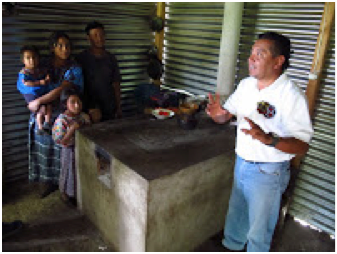
Typical open fire for cooking

The success of this model is emphasized by the fact that all new participating villages have asked Aldea to come work with them; Aldea does not recruit new partners. When a village requests help, Aldea experts evaluate the best way to create a clean water supply for every household and then works with government engineers to design the project. Villagers are then helped to build gray water and sanitary latrine systems at each home. Efficient, ventilated stoves have been specially designed to allow each householder to build their own unit with plans, equipment, and help from experts. Firewood use is decreased 50-80% and the homes are now free of indoor smoke, carbon monoxide and other pollutants.

Efficient smoke free stove

Aldea-trained local teachers have group classes for women, educating them about their rights, nutrition and child care. These women are excited! The new water and cooking facilities cut their work day in half or less; their children, their husbands and they themselves are much healthier (respiratory and enteric diseases almost vanish); they have time to weave cloth for sale; their health, new income and knowledge of women’s rights and respectful family relationships create a new world.

Women in leadership class

Part of the Aldea team is a Mayan agronomist who shows each family how to cultivate a vegetable garden around their hut.

The best seeds are made available at low cost. For each child between ages 2 and 5 the family gets a baby goat who will provide milk for that child after maternal breastfeeding ends. Goats are bred and the family passes the kid (goat, not child) on to another village family with a small child. In a few years all the children have a safe, reliable milk supply.

Woman explaining how she plants her vegetable garden

Milking their family goat

We met villagers whose lives have been changed and those who are waiting for Aldea; they live in different worlds, all for a cost of $1400 per family.

This is lifestyle medicine at its best. Check out the Aldea website to read more details. http://www.ALDEAGuatemala.org

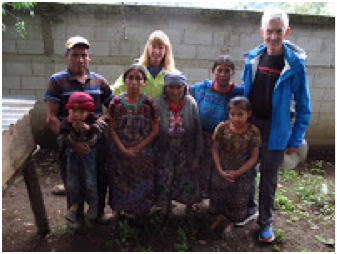
With Deb & me with a Mayan family

Mistreated

Mistreated is a new book by Robert Pearl, CEO of the Permanente (Kaiser) Medical Group, which is by far the largest physician group in the United States. Dr. Pearl is a plastic surgeon who is also a professor at both Stanford’s Medical and Business Schools. In Mistreated he discusses the current status of medical care and practice in America together with his ideas on what needs to be changed.

Pearl feels that our system is poorly designed and is failing in many respects. We pay a huge amount of money for medical care that, by many standards, is the worst in the developed world. One third of American physicians are very unhappy with their job and over half tell their children not to pursue a medical career primarily because of the huge amount of time necessary for record keeping and battles with insurance companies.

Pearl uses the term “legacy players” to describe powerful groups who control how medicine is practiced and who profit from our current system. These are: insurance companies; hospitals; physician specialty groups; drug and equipment manufacturers. To this list I would add a fifth group: medical education including medical schools, residency training and postgraduate education programs. Our medical education determines what physicians learn and value. It is tailored to sustain and perpetuate our current failing system, allowing the other legacy players to continue taking unreasonable amounts of money from health care.

Patients want Pearl’s four “C’s”: cost at the lowest possible level; clinical excellence; coordination of services and information; compassion from their health care providers.
Our current fee for service system pays more for doing more, not for doing things in the best interest of the patient. Such a system is destined to be wasteful and to harm patients by unnecessary procedures and treatments. Specialty physicians are paid much more than primary care givers and preventive services are poorly reimbursed.
200,000 people a year are killed by avoidable medical errors in the United States. Most of these deaths can be prevented by better systems and following proven protocols. Examples offered by Pearl include unintegrated medical record systems in which critical patient information is not shared; failure to follow proven accepted protocols (e.g. hand washing between every patient contact); unwillingness to accept proven life saving approaches (e. g. sepsis work up); hospitals or practices with insufficient experience (volume) in intricate procedures.
He also faults systems and physicians who are not centered around patient convenience and need to know information. Emails and telemedicine visits can save enormous amounts of patient time and expense. Patients have the right to convenience and correct information about procedures and prognosis. Oncology is particularly at fault in this regard. Palliative care without surgery, radiation or drugs is often the best option for a cancer patient, but this frequently is not offered or appropriately discussed.
Medical record systems are poorly coordinated between institutions and are often poorly designed. This can be to hospitals and system purveyors advantage. It’s difficult for patients to move to another medical center and more efficient system designers are frozen out of the market. Pearl correctly advocates that all medical record systems must be inter-compatible and open to improvements by outside competition. Most other businesses have this model and their electronic systems change faster and are much more effective.

Pearl’s conclusion is that pre-paid, large, multi-disciplinary groups like the Mayo Clinic, Intermountain Health Care, Virginia Mason and Kaiser offer the best medical model- good health care at the best price. His caveat is that individuals in these huge groups have to be very attentive to personal needs and preferences which can get lost in large organizations.

This is a wonderful book which I recommend to anyone interested in health care. It should be required reading for premeds, medical students and residents.
I have two major disagreements with Mistreated. Best practice is lifestyle medicine which focuses on diet as the first way of preventing and managing chronic disease. Pearl does not even mention this in a book about optimizing health care. He emphasizes screening as an excellent preventive service. There are situations where screening is warranted but it is not the panacea Pearl suggests. Dr. H. Gilbert Welch of Dartmouth Medical School has written several excellent books and many articles explaining the problems with over utilization of screening techniques. A subsequent blog will discuss Welch’s research.

Animal Protein

Luigi Fontana’s research in longevity and health also examines diet composition. Although timing of eating can improve longevity, what is eaten is even more important. The book which piqued my interest in diet and nutrition, The China Study, by Campbell and Campbell, emphasized the harmful health effects of animal protein in Campbell’s laboratory research, confirmed with epidemiological statistics in China where it was clear that those who ate the least animal products lived longer and avoided most chronic illnesses including cancer and heart disease. Fontana has reached the same conclusion through analysis of his own and others’ research. When minimally processed plant foods form the bulk of the diet all animals studied, including humans, live longer and enjoy better health.

Animal protein promotes cellular aging and encourages cancer growth at least partly by causing an excess of insulin-like growth factor 1 (IGF-1). IGF-1 is a naturally occurring hormone which aids tissue growth. A diet with more than very small amounts of animal protein causes an excess of this hormone. Our western diet is wonderful for producing huge NFL players, cancer, other chronic disease and premature death.

Why do some “experts” still promote high protein diets? The agriculture and food industries have a giant stake in maintaining our current eating habits. They support research labs and the press to spread misleading, incomplete or false information. There is no doubt what Fontana and other top scientists have discovered about food, but money can buy a lot of misinformation.

Fontana has also emphasized the economic and environmental value of a whole food plant based diet. Changing to this way of eating will drastically reduce pollution and save huge amounts of money in food production, medical and other costs.

Intermittent Fasting

Dr. Luigi Fontana is professor at Brescia University Medical School and Washington University Medical School where he is also co-director of the Longevity Research Program. His longevity work on simple organisms, animals and humans is among the the most cited by researchers around the world.

Calorie restriction has been highly correlated with increased lifespan and a much lower incidence of chronic conditions especially cardiovascular disease and cancer. People who long term have eaten 40% fewer calories than standard needs for age, weight, sex and activity levels appear 20 years younger by many tests of body and tissue age. Although some people choose this eating style, most of us are unwilling to consider it. Dr. Fontana has looked at many variations in eating patterns to determine whether total calorie restriction or dietary restriction (changes in eating patterns and/or foods eaten) determines health and longevity. His conclusion is that eating patterns and the food eaten are what is critical. Those who calorie restrict control times of eating and what they eat but calorie restriction itself is not the key to health and longevity.
Patterns of eating which are particularly healthy:
Consuming most of your calories early in the day
Consuming all calories in one 5-7 hour period during the day (intermittent fasting)
Fasting every other day or at least two days a week

My son John switched to intermittent fasting a few years ago after I told him of Fontana’s research. He has his first meal of the day after noon and an early dinner- no breakfast, snacks or late night meals. He finds this pleasant, not difficult and it does not harm his strength(he’s a weight lifter) or energy. He also lost 15 -20 unwanted pounds. Intermittent fasting does not lead to weight loss unless calories are also decreased. John and many others on this regime do lose weight because they naturally eat less with this schedule.

Fontana L and Partridge L: Promoting Health and Longevity through Diet: From Model Organisms to Humans. Cell 161(1)
26 Mar15 106-118

Salt

The popular press has regular articles about health issues and salt in the diet. A typical message is that 20-25% of people are salt sensitive: they have a rise in blood pressure after eating more than minimal salt. Often a suggestion is made to test for salt sensitivity by checking blood pressure after a high salt meal. If sensitive, limit salt; otherwise eat salt as you please.
This is an incorrect message since excess salt causes serious problems for everyone. A high salt meal depresses endothelial function, the ability of blood vessels to dilate when necessary. The effects of a high salt diet build up over years with resultant vascular and kidney damage.
https://www.ncbi.nlm.nih.gov/pubmed/24401240
Excess salt also interferes with immune function and some studies have shown improvement in asthma with salt restriction.
https://www.ncbi.nlm.nih.gov/pubmed/17109669

Scientific studies are unequivocal- excess salt is a problem for everyone and is a major cause of preventable disease and death.
The food industry has an enormous interest in promoting salt use. Most prepared and fast foods have large amounts of salt. For most people the primary source of salt is food eaten outside the home. Many meats have salt water injected to increase weight and improve storability.
Most of us are use to and like salty food, but eliminating salt at the table and when preparing food will allow a change in preference. After two weeks of a low salt diet most prefer low salt foods and enjoy other flavors salt was masking. It’s not a hard transition and it’s much better for health. Deb and I now prefer food prepared with little or no salt. Restaurants often will prepare low salt meals on request.

Preventing Breast Cancer

Dr. Graham Colditz is a professor at Washington University Medical School where he is the chief of public health sciences and the lead investigator of a National Cancer Institute research center focused on cancer prevention. Dr. Colditz’s research shows that breast cancer is a largely preventable disease controlled by lifestyle. By far the most important factor is diet. A whole food plant based (WFPB) diet which is mostly or entirely whole plant foods with little or no animal products or vegetable oils controls cancer development and growth rates even in women with the BRCA 1 and 2 gene mutations. He estimates that 68% of breast cancer will be prevented by starting this lifestyle in childhood and 50% by starting as an adult. He labels milk as an especially dangerous food, and advises an early start on good dietary habits for greater effect and also because peer pressure becomes more important than parental input after age 8 or 9. This is not the advice of one of the writers on diet; this is the advice of “an internationally recognized leader in cancer prevention.”

onlinelibrary.wiley.com/doi/10.3322/caac.21225/full
(This website requires scrolling down to get to text. The top area is blank.)

Dietary fat and animal proteins control the development and growth of breast cancer in laboratory animals. Excess body weight and higher levels of serum estrogen are also potent breast cancer stimulators. A WFPB diet decreases all these critical factors.
Women with diagnosed breast cancer, even metastatic disease, also do much better on this diet. When cancer cells in a laboratory petri dish are exposed to serum of women with breast cancer who are eating a WFPB diet most are killed; this is not true for serum from those eating the standard high fat and animal protein western diet. Read the story of Ruth Heydrich, a long term survivor of metastatic breast cancer.

allfor-health.blogspot.com/2013/01/interview-with-dr-ruth-heydrich.html

Diet is as important in breast cancer prevention as smoking is in lung cancer. It is similarly critical in prostate and colorectal cancers.