Aldea

Thirty years ago the New England Journal of Medicine (NEJM) published an editorial about Dr. Carroll Behrhorst, a Kansas GP who had moved to Guatemala to work with the rural Mayan communities. The story was compelling and since 1987 I have contributed to the foundation supporting his work, now called Aldea, and followed their progress. To commemorate the 50th anniversary of its foundation Aldea this month offered tours of remote villages and a celebration dinner in Antigua, Guatemala, a beautiful old Spanish colonial city near some of the villages. Deb and I have just returned from this celebration.

Guatemala has wealth but it is concentrated in a small percentage of the people. Although the country is a democracy, policy is controlled by the wealthy elite and corrupt politicians; the wealth does not reach the Mayans and other native americans who comprise about 40% of the population. They receive little health care or education. Childhood malnutrition and death rates are very high due to poor food choices, respiratory and gastrointestinal diseases.

women carrying water 5 to 7 times daily

“Doc” Behrhorst quickly recognized that American style medical care was not the answer to the Mayan’s needs and developed educational, infrastructure and public health activities to address the problems. Over the decades his successors have refined approaches to provide education, clean water and good quality food to inhabitants of several hundred small villages. Their methods have been cited by the World Health Organization (WHO) as one of the best in the world for developing nations and is used as a model for other countries.
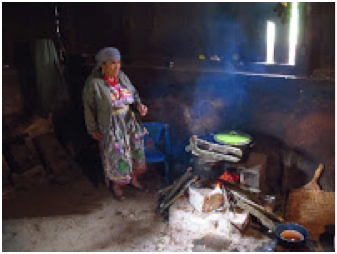
Typical open fire for cooking

The success of this model is emphasized by the fact that all new participating villages have asked Aldea to come work with them; Aldea does not recruit new partners. When a village requests help, Aldea experts evaluate the best way to create a clean water supply for every household and then works with government engineers to design the project. Villagers are then helped to build gray water and sanitary latrine systems at each home. Efficient, ventilated stoves have been specially designed to allow each householder to build their own unit with plans, equipment, and help from experts. Firewood use is decreased 50-80% and the homes are now free of indoor smoke, carbon monoxide and other pollutants.

Efficient smoke free stove

Aldea-trained local teachers have group classes for women, educating them about their rights, nutrition and child care. These women are excited! The new water and cooking facilities cut their work day in half or less; their children, their husbands and they themselves are much healthier (respiratory and enteric diseases almost vanish); they have time to weave cloth for sale; their health, new income and knowledge of women’s rights and respectful family relationships create a new world.

Women in leadership class

Part of the Aldea team is a Mayan agronomist who shows each family how to cultivate a vegetable garden around their hut.

The best seeds are made available at low cost. For each child between ages 2 and 5 the family gets a baby goat who will provide milk for that child after maternal breastfeeding ends. Goats are bred and the family passes the kid (goat, not child) on to another village family with a small child. In a few years all the children have a safe, reliable milk supply.


Woman explaining how she plants her vegetable garden

Milking their family goat

We met villagers whose lives have been changed and those who are waiting for Aldea; they live in different worlds, all for a cost of $1400 per family.

This is lifestyle medicine at its best. Check out the Aldea website to read more details. http://www.ALDEAGuatemala.org
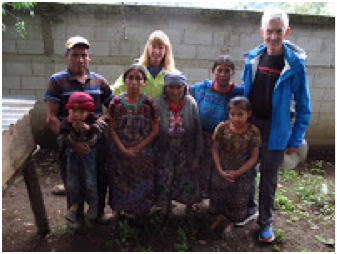
With Deb & me with a Mayan family

Mistreated

Mistreated is a new book by Robert Pearl, CEO of the Permanente (Kaiser) Medical Group, which is by far the largest physician group in the United States. Dr. Pearl is a plastic surgeon who is also a professor at both Stanford’s Medical and Business Schools. In Mistreated he discusses the current status of medical care and practice in America together with his ideas on what needs to be changed.

Pearl feels that our system is poorly designed and is failing in many respects. We pay a huge amount of money for medical care that, by many standards, is the worst in the developed world. One third of American physicians are very unhappy with their job and over half tell their children not to pursue a medical career primarily because of the huge amount of time necessary for record keeping and battles with insurance companies.

Pearl uses the term “legacy players” to describe powerful groups who control how medicine is practiced and who profit from our current system. These are: insurance companies; hospitals; physician specialty groups; drug and equipment manufacturers. To this list I would add a fifth group: medical education including medical schools, residency training and postgraduate education programs. Our medical education determines what physicians learn and value. It is tailored to sustain and perpetuate our current failing system, allowing the other legacy players to continue taking unreasonable amounts of money from health care.

Patients want Pearl’s four “C’s”: cost at the lowest possible level; clinical excellence; coordination of services and information; compassion from their health care providers.
Our current fee for service system pays more for doing more, not for doing things in the best interest of the patient. Such a system is destined to be wasteful and to harm patients by unnecessary procedures and treatments. Specialty physicians are paid much more than primary care givers and preventive services are poorly reimbursed.
200,000 people a year are killed by avoidable medical errors in the United States. Most of these deaths can be prevented by better systems and following proven protocols. Examples offered by Pearl include unintegrated medical record systems in which critical patient information is not shared; failure to follow proven accepted protocols (e.g. hand washing between every patient contact); unwillingness to accept proven life saving approaches (e. g. sepsis work up); hospitals or practices with insufficient experience (volume) in intricate procedures.
He also faults systems and physicians who are not centered around patient convenience and need to know information. Emails and telemedicine visits can save enormous amounts of patient time and expense. Patients have the right to convenience and correct information about procedures and prognosis. Oncology is particularly at fault in this regard. Palliative care without surgery, radiation or drugs is often the best option for a cancer patient, but this frequently is not offered or appropriately discussed.
Medical record systems are poorly coordinated between institutions and are often poorly designed. This can be to hospitals and system purveyors advantage. It’s difficult for patients to move to another medical center and more efficient system designers are frozen out of the market. Pearl correctly advocates that all medical record systems must be inter-compatible and open to improvements by outside competition. Most other businesses have this model and their electronic systems change faster and are much more effective.

Pearl’s conclusion is that pre-paid, large, multi-disciplinary groups like the Mayo Clinic, Intermountain Health Care, Virginia Mason and Kaiser offer the best medical model- good health care at the best price. His caveat is that individuals in these huge groups have to be very attentive to personal needs and preferences which can get lost in large organizations.

This is a wonderful book which I recommend to anyone interested in health care. It should be required reading for premeds, medical students and residents.
I have two major disagreements with Mistreated. Best practice is lifestyle medicine which focuses on diet as the first way of preventing and managing chronic disease. Pearl does not even mention this in a book about optimizing health care. He emphasizes screening as an excellent preventive service. There are situations where screening is warranted but it is not the panacea Pearl suggests. Dr. H. Gilbert Welch of Dartmouth Medical School has written several excellent books and many articles explaining the problems with over utilization of screening techniques. A subsequent blog will discuss Welch’s research.

Animal Protein

Luigi Fontana’s research in longevity and health also examines diet composition. Although timing of eating can improve longevity, what is eaten is even more important. The book which piqued my interest in diet and nutrition, The China Study, by Campbell and Campbell, emphasized the harmful health effects of animal protein in Campbell’s laboratory research, confirmed with epidemiological statistics in China where it was clear that those who ate the least animal products lived longer and avoided most chronic illnesses including cancer and heart disease. Fontana has reached the same conclusion through analysis of his own and others’ research. When minimally processed plant foods form the bulk of the diet all animals studied, including humans, live longer and enjoy better health.

Animal protein promotes cellular aging and encourages cancer growth at least partly by causing an excess of insulin-like growth factor 1 (IGF-1). IGF-1 is a naturally occurring hormone which aids tissue growth. A diet with more than very small amounts of animal protein causes an excess of this hormone. Our western diet is wonderful for producing huge NFL players, cancer, other chronic disease and premature death.

Why do some “experts” still promote high protein diets? The agriculture and food industries have a giant stake in maintaining our current eating habits. They support research labs and the press to spread misleading, incomplete or false information. There is no doubt what Fontana and other top scientists have discovered about food, but money can buy a lot of misinformation.

Fontana has also emphasized the economic and environmental value of a whole food plant based diet. Changing to this way of eating will drastically reduce pollution and save huge amounts of money in food production, medical and other costs.

Intermittent Fasting

Dr. Luigi Fontana is professor at Brescia University Medical School and Washington University Medical School where he is also co-director of the Longevity Research Program. His longevity work on simple organisms, animals and humans is among the the most cited by researchers around the world.

Calorie restriction has been highly correlated with increased lifespan and a much lower incidence of chronic conditions especially cardiovascular disease and cancer. People who long term have eaten 40% fewer calories than standard needs for age, weight, sex and activity levels appear 20 years younger by many tests of body and tissue age. Although some people choose this eating style, most of us are unwilling to consider it. Dr. Fontana has looked at many variations in eating patterns to determine whether total calorie restriction or dietary restriction (changes in eating patterns and/or foods eaten) determines health and longevity. His conclusion is that eating patterns and the food eaten are what is critical. Those who calorie restrict control times of eating and what they eat but calorie restriction itself is not the key to health and longevity.
Patterns of eating which are particularly healthy:
Consuming most of your calories early in the day
Consuming all calories in one 5-7 hour period during the day (intermittent fasting)
Fasting every other day or at least two days a week

My son John switched to intermittent fasting a few years ago after I told him of Fontana’s research. He has his first meal of the day after noon and an early dinner- no breakfast, snacks or late night meals. He finds this pleasant, not difficult and it does not harm his strength(he’s a weight lifter) or energy. He also lost 15 -20 unwanted pounds. Intermittent fasting does not lead to weight loss unless calories are also decreased. John and many others on this regime do lose weight because they naturally eat less with this schedule.

Fontana L and Partridge L: Promoting Health and Longevity through Diet: From Model Organisms to Humans. Cell 161(1)
26 Mar15 106-118

Salt

The popular press has regular articles about health issues and salt in the diet. A typical message is that 20-25% of people are salt sensitive: they have a rise in blood pressure after eating more than minimal salt. Often a suggestion is made to test for salt sensitivity by checking blood pressure after a high salt meal. If sensitive, limit salt; otherwise eat salt as you please.
This is an incorrect message since excess salt causes serious problems for everyone. A high salt meal depresses endothelial function, the ability of blood vessels to dilate when necessary. The effects of a high salt diet build up over years with resultant vascular and kidney damage.
https://www.ncbi.nlm.nih.gov/pubmed/24401240
Excess salt also interferes with immune function and some studies have shown improvement in asthma with salt restriction.
https://www.ncbi.nlm.nih.gov/pubmed/17109669

Scientific studies are unequivocal- excess salt is a problem for everyone and is a major cause of preventable disease and death.
The food industry has an enormous interest in promoting salt use. Most prepared and fast foods have large amounts of salt. For most people the primary source of salt is food eaten outside the home. Many meats have salt water injected to increase weight and improve storability.
Most of us are use to and like salty food, but eliminating salt at the table and when preparing food will allow a change in preference. After two weeks of a low salt diet most prefer low salt foods and enjoy other flavors salt was masking. It’s not a hard transition and it’s much better for health. Deb and I now prefer food prepared with little or no salt. Restaurants often will prepare low salt meals on request.

Preventing Breast Cancer

Dr. Graham Colditz is a professor at Washington University Medical School where he is the chief of public health sciences and the lead investigator of a National Cancer Institute research center focused on cancer prevention. Dr. Colditz’s research shows that breast cancer is a largely preventable disease controlled by lifestyle. By far the most important factor is diet. A whole food plant based (WFPB) diet which is mostly or entirely whole plant foods with little or no animal products or vegetable oils controls cancer development and growth rates even in women with the BRCA 1 and 2 gene mutations. He estimates that 68% of breast cancer will be prevented by starting this lifestyle in childhood and 50% by starting as an adult. He labels milk as an especially dangerous food, and advises an early start on good dietary habits for greater effect and also because peer pressure becomes more important than parental input after age 8 or 9. This is not the advice of one of the writers on diet; this is the advice of “an internationally recognized leader in cancer prevention.”

onlinelibrary.wiley.com/doi/10.3322/caac.21225/full
(This website requires scrolling down to get to text. The top area is blank.)

Dietary fat and animal proteins control the development and growth of breast cancer in laboratory animals. Excess body weight and higher levels of serum estrogen are also potent breast cancer stimulators. A WFPB diet decreases all these critical factors.
Women with diagnosed breast cancer, even metastatic disease, also do much better on this diet. When cancer cells in a laboratory petri dish are exposed to serum of women with breast cancer who are eating a WFPB diet most are killed; this is not true for serum from those eating the standard high fat and animal protein western diet. Read the story of Ruth Heydrich, a long term survivor of metastatic breast cancer.

allfor-health.blogspot.com/2013/01/interview-with-dr-ruth-heydrich.html

Diet is as important in breast cancer prevention as smoking is in lung cancer. It is similarly critical in prostate and colorectal cancers.

Interval Training

Several physiology labs study interval training, a form of exercise which varies intensity of an activity during a cardio workout. Any activity like running, swimming, cycling etc. can be used but exercise bikes are often the most practical for many people.
Regular cardio workouts increase cardiopulmonary reserve, help reach or maintain optimal weight, support good sleep and increase longevity. There is good evidence that high levels and more time spent provide better results but that even modest brisk walks several times a week are very helpful.
A Danish research lab documented excellent results from this regime:
short warmup
30 seconds of normal exertion
20 seconds of greater exertion
10 seconds of maximal exertion
short cooling off

https://www.ncbi.nlm.nih.gov/pubmed/25439558

This is repeated up to a total of 10-15 times in sets of five separated by two minutes of very light activity. Three times a week is more effective than daily workouts just as is true for building strength through weight training. As with all workout programs numbers and intensity of the workout should be gradually increased until 10 to 15 reps can be done comfortably.
Their comparison with other cardio training methods showed superior conditioning results with relatively little time invested.
I use this method and find it easy to follow- not too painful or or time consuming.
Mayo Clinic researchers tried different exercise regimes (vigorous weight training; light weight lifting plus moderate intensity exercise bike; interval training) on young and older subjects who allowed muscle biopsies to monitor results. All activities improved fitness and ability to regulate blood sugar. Cellular genetic mitochondrial changes reflecting cellular health and younger apparent age were much greater in those who did interval training. Remarkably, these effects were much more in older people. Interval training can now be called “a fountain of youth.”

Modern Medical Care and Dietary Confusion

Medical schools and teaching hospitals control medical education. Curriculum content is determined by licensing requirements together with the preferences and knowledge of medical school deans and faculty. My working medical career was spent at several of these schools where I got to know many other faculty members. Most were intelligent, hard working and ambitious, but we were all specialists in a small corner of medicine with no or limited knowledge of other important aspects of medical science. Many faculty members are also constrained by the need to obtain funding for research projects that are the focus of their career and the determinant of salary, promotion and recognition. Increasingly, more research funding is coming from the drug and other medical industries. Professors have rarely been trained in diet and nutrition; they also have no time or motivation to learn this material. Even worse, there is often a conflict when diet information would devalue the benefits of medications- the bread and butter of medical research and medical schools. It’s no surprise that physicians and other medical workers have little or no training or interest in diet and nutrition.

This crisis in medical research and practice has been decried by some of the most respected leaders in medicine but medical institutions want money and medical businesses have the money.  Business effectively controls research, faculty priorities and medical education. Physicians come out of school and residency poorly trained except in writing prescriptions and performing complicated procedures. But health depends on lifestyle choices much more than it does on other factors. Reliance on medical professionals to give optimal guidance in health care has led to epidemics of preventable conditions: heart attacks, strokes, cancer, dementia, auto-immune diseases. The large majority of these are avoidable with proper lifestyle choices, particularly diet.

Another big problem is misinformation about best dietary choices. Everyone has dietary preferences based on family tradition and past eating habits. Human nature is to look for support for our preferences. For decades some physicians advocated cigarettes and smokers were delighted to hear that “Doctors prefer Camels,” even if they themselves smoked Luckies. The tobacco industry spent lavishly to support this misinformation just as agribusinesses, fast and processed food industries are doing now. Healthy foods are whole plant foods but billions of dollars in spending are dependent on people believing that other choices- animal products, processed and refined foods are as good or better options.

Modern medical centers are dependent on high volume to pay for expensive facilities and equipment. They often advertise these services and encourage medical providers and patients to use them. Dr. H. Gilbert Welch, a Dartmouth Medical School professor, and his colleagues have done extensive research documenting the harm from over-utilization of diagnostic and treatment options. Welch’s work has been the subject of several NY Times op-ed pieces and he has written many scientific articles published in top peer reviewed journals plus several excellent books on this topic. Medical care is big business and uses the techniques of other businesses to encourage over-utilization. The unfortunate result is often poor health for patients and huge amounts of wasted money.

Value of Screening Mammography

Several months ago I sent an email which described recent studies questioning the value of screening mammography. Replies from radiologists who do mammography expressed surprise, unhappiness and even convinced disagreement.

One of the problems with the evaluation of studies on mammography is that they are often done or sponsored by those with financial or professional advantage from the examination. The big pushers are usually radiologists who have devoted their careers to mammography. Evaluations of studies on drugs done or sponsored by drug companies have showed strong bias towards advocating their product.

JOURNAL WATCH has a review of a recent study from OBSTETRICS AND GYNECOLOGY, a major peer reviewed journal, which did a paired study of Sweden vs. Norway, Ireland vs. No. Ireland and The Netherlands vs. Belgium. In each of these pairs nationwide mammography was implemented by 1990 in one and substantially later in the other. All 6 countries showed a substantial decrease in breast cancer mortality between 1989 and 2006. For example -24% in Norway and -16% in Sweden but the decreases were no more in the fully screened countries (Sweden started full screening much earlier than Norway.) A similar study of cervical cancer screening in the Nordic counties showed that nationwide screening was highly correlated with decrease in mortality from cervical cancer. Countries which implemented earlier screening showed a much greater decrease in cervical cancer mortality. The reviewer concludes that a decrease in mortality from breast cancer due to mammography has not been shown, and that recent decreases in mortality from breast cancer in developed countries can be explained by changes in treatment, not by earlier diagnosis through mammography.

Mammography screening is very expensive nationally, leads to many unnecessary work ups with anxiety, biopsies and even surgery, radiation or chemotherapy for those who don’t need it. Every radiologist, surgeon, clinician can cite examples of early diagnosis of breast cancer through mammography followed by appropriate therapy with long term survival, perhaps cure. The problem is that this does not show that this test is of any value. My suggestion to women is to get screening mammograms if they will be anxious or unhappy without them, but not to get them because they believe that mammography is definitely shown to improve their chance of not dying due to breast cancer. Mammography may be of value but the large number of studies done on the subject has not shown it convincingly. Those who get screening mammograms are guaranteed a much greater chance of unnecessary expensive and, perhaps dangerous, work ups with the associated anguish involved.

Diet, Longevity and Quality of Life

Longevity is the gold standard for evaluating diet and other lifestyle choices since there are strong correlations between longevity, overall health and quality of day-to-day life. According to researchers at the New England Centenarian Study “The older you are, the healthier you’ve been. “ Studies of long-lived Adventists confirm this. Most who live into their late 80’s and beyond have compressed end of life morbidity (morbidity defined as significant sicknesses.) The argument “I don’t care how long I live; I just want to enjoy life” doesn’t work since enjoying life with decades of painful and expensive chronic illnesses is very difficult. Using longevity to compare different dietary choices is much simpler and more accurate than using other parameters like weight, blood sugar, or cholesterol. Normal blood sugar is no consolation to a diabetic who dies prematurely after several years of living paralyzed by a stroke or dialysis due to chronic kidney disease.
Many advocates of different diets and medications use weight, blood sugar or serum cholesterol results to support their choice. Using longevity is simpler and much more accurate. Longevity studies are unequivocal. The only diets associated with longevity are those consisting mainly or entirely of whole plant foods. Nutrition experts debate how much fish, lean white meats or non-fat dairy should be included but agree that an optimal diet is filled with whole grains and other unrefined starches, vegetables, legumes, fruits, seeds and nuts. The bulk of calories should come from unrefined starches, not fat and protein as it is in the typical American diet.
Several excellent studies confirmed the value of this type diet in China, Okinawa, and the Mediterranean area. Since many Adventists are vegetarian or vegan the diets of Adventists in southern California have been the subject of hundreds of scientific studies. These studies confirm that the fewer animal products in the diet, the longer you live and the healthier you are. It is not the climate or some other variable in the Mediterranean area, China or Okinawa, it’s the food!
The New England Centenarian Study has examined characteristics of long-lived people and concluded that most people can live into their late 80’s through a healthy life style that includes not smoking and a diet that is mainly whole plant foods. Genetics determines who will live past that age. Some reach very old age in spite of poor life style but these people are rare exceptions with unusual genetics. Even those with good genes usually need a healthy life style to reach 100 or more.